
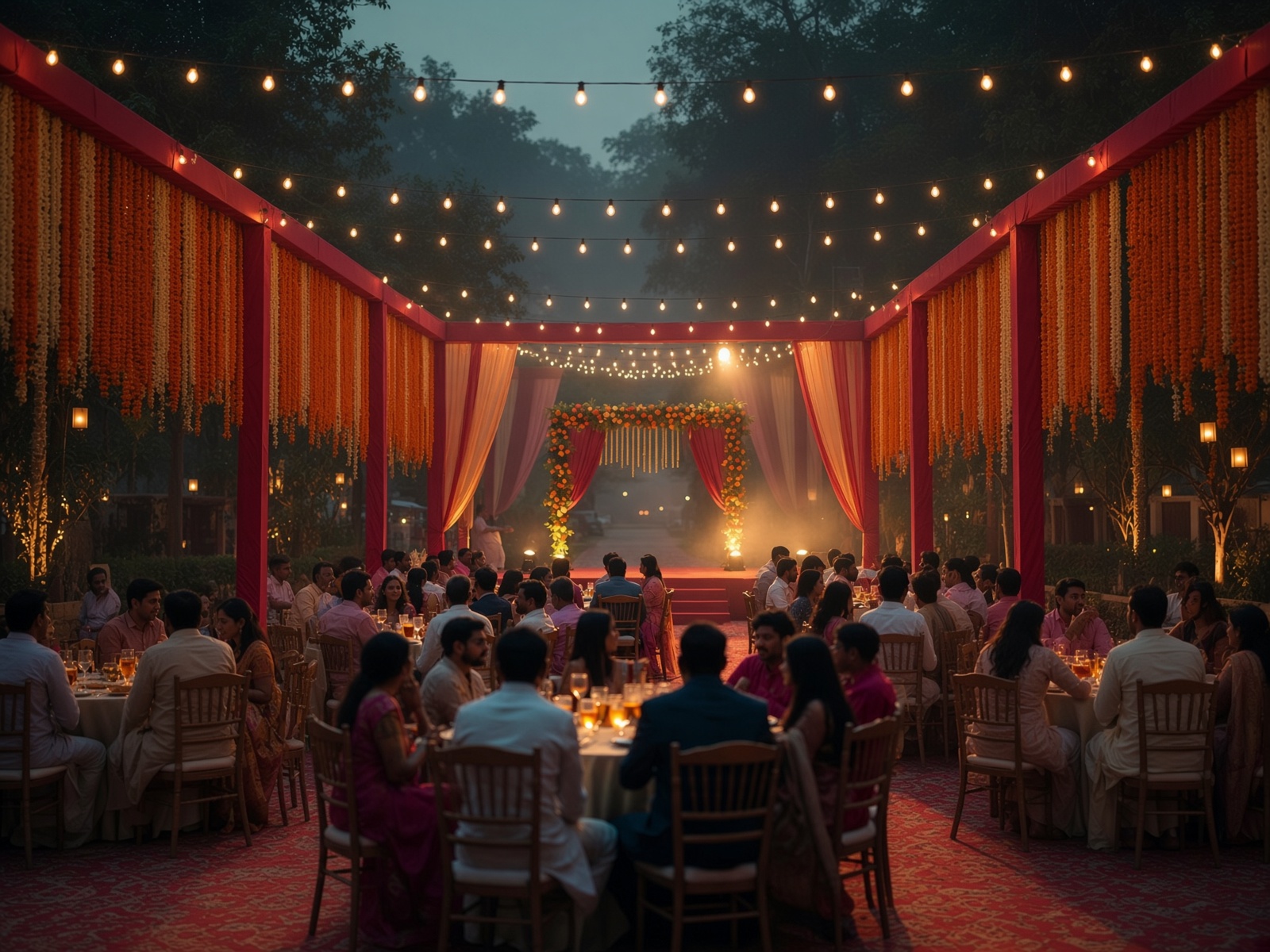
Search for sangeet help and you will find a thousand song lists. What almost nobody publishes is the thing you actually need at 6pm on the night: a running order.
Who performs first. How long the whole thing should take. When people eat. Where the speeches go. What to do when three separate groups have all choreographed to the same song.
Here is how a sangeet actually runs.
Most modern sangeets run three to five hours and follow roughly this arc:
Arrival and mingling — 45 to 60 minutes. Drinks, photos, people finding their seats. Do not start performances during this window. Half the guests will not be in the room.
Formal welcome — 5 minutes. Whoever is hosting says a few words. Keep it genuinely short.
Performance block one — 40 to 60 minutes. The bulk of choreographed items.
Dinner — 60 to 90 minutes. Non-negotiable, and it should not be pushed later than 9pm if elderly relatives or children are present.
Performance block two — 30 to 45 minutes. The showstoppers. Couple’s dance, family face-off, whatever you have been building toward.
Speeches or a video — 15 minutes. Placed here deliberately. More on this below.
Open dance floor — until it ends. Once this opens, it does not close. Anything you have not done yet will not happen.
Order matters more than people expect. A good sequence builds; a bad one peaks early and dies.
Cap it at eight to ten performances. More than that and the room loses attention regardless of quality. If you have fifteen groups wanting to perform, merge some.
Two to three minutes per item. Songs almost always need cutting. Nobody has ever complained that a sangeet performance was too short.
Duplicate songs. Two groups arrive having both choreographed to the same track. Fix: one person keeps a master list and approves songs. Circulate it.
No rehearsal in the actual space. Groups practise in living rooms, then discover the stage is half the size. Do a walkthrough if you can.
The sound problem. Somebody’s music is on a phone that will not connect. Collect every track in advance in one folder, on one device, in the running order, with a backup.
Overrunning. Every sangeet overruns. Build in slack rather than pretending it will not.
Nobody hosting. Sangeets without an MC drift badly between items. Assign someone — ideally a cousin who is comfortable on a microphone and knows the family well enough to be funny about them.
The slot after the second performance block, before the dance floor opens, is the most valuable fifteen minutes of the night. The room is warm, everyone has eaten, and nobody has left yet.
This is where a video from family belongs — messages from the relatives who could not travel, blessings from grandparents, the aunt in Sharjah who could not get leave. Played here it lands properly, in front of everyone, rather than being tacked onto a reception nobody remembers.
For diaspora families in particular this is often the only moment in the whole wedding where absent family are genuinely present in the room. If a meaningful part of your family is in another country, plan this slot deliberately rather than improvising.
Collecting the messages is the part that usually falls apart — video files compressed by WhatsApp, formats that will not play on the venue system, twenty people chased across four time zones. Folksee handles that specifically: share one link on WhatsApp, everyone records from their own phone, and every message plays back in order in one reel. Contributors sign in with Google or an email address. It takes a few seconds, and there's nothing to install.
Start collecting six weeks out. People are slow.
For a 6:30pm start:
Adjust for your own timings, but keep the shape: warm up, feed people, peak, land the emotional beat, then let go.
Why we made Folksee
People deflect love when you say it to their face. A reel takes the room away, so it finally lands — and it's the opposite of doomscrolling.
Read what Reels with Feels means →


Everything works best in your phone’s browser. Tap below to open Folksee in Chrome/ Safari.
