
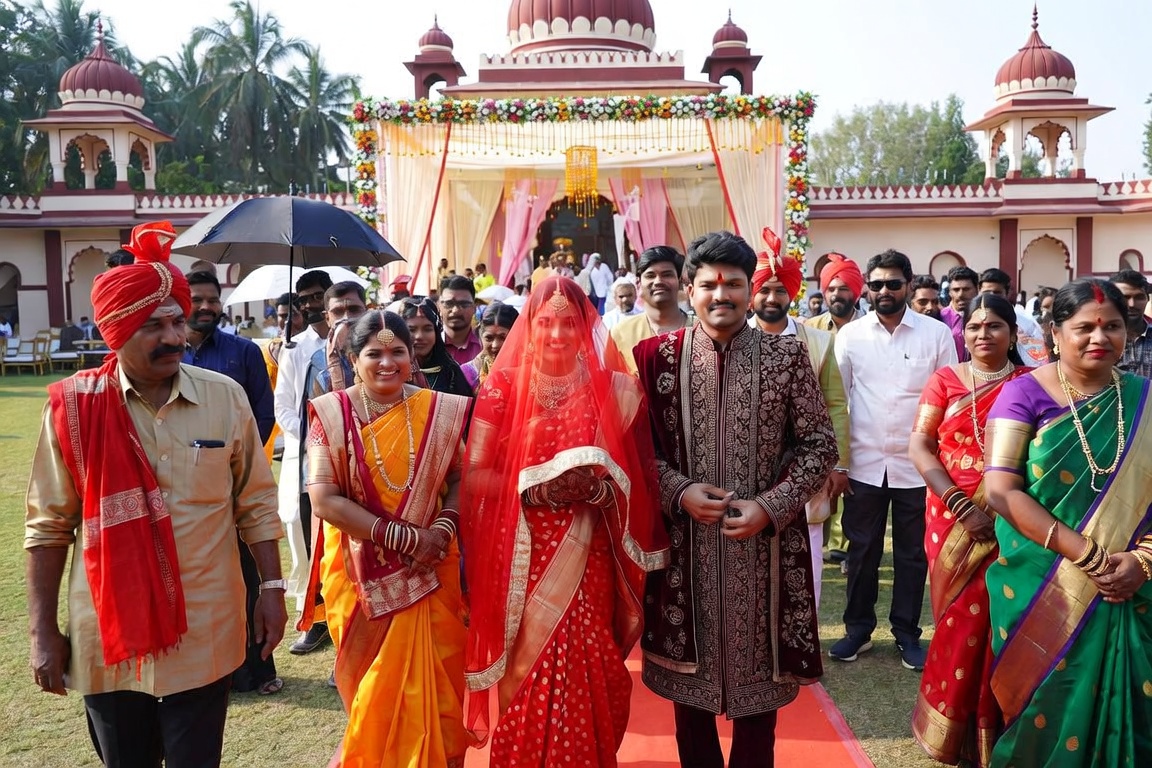
A typical Indian family is now spread across at least three countries. The wedding happens in one of them. Everyone else participates from a distance, or does not participate at all.
This guide is about the second problem — how to give distant family a real role rather than a spectator’s seat.
Before planning anything, write down everyone you genuinely want present. Then mark who realistically cannot come and why — visa, cost, health, work, distance.
That second list is the one to plan around. Most couples never write it down, and as a result they improvise on the wedding day and do it badly.
The difference between someone feeling included and someone feeling watched is whether they have something to do.
Ask a distant relative to record a blessing that gets played at a specific moment. Now they have a role in the ceremony.
Have a cousin abroad organise the video messages from their side of the family. Delegating this is genuinely useful and makes them part of the planning.
Ask an aunt to send a family recipe to be served, or a saree to be worn. Physical presence by proxy.
Have someone lead a song or a dance remotely at the sangeet, on a screen. Sounds awkward. Works surprisingly well when the family is game.
Ask elders to record advice for the couple as a set. Compiled together, this becomes something the couple keeps permanently.
If family is spread across India, the Gulf, the UK, and North America, there is no time that works for everyone. Pick your battles.
This is the most reliable way to include distant family, and it fails almost entirely on logistics rather than willingness.
Start six weeks out. Not two. People are slow, and older relatives need to be asked more than once.
Ask a specific question. “Send a video” gets thirty seconds of nothing. Better prompts:
Set a time limit. Sixty to ninety seconds. Say it explicitly or someone will send eleven minutes.
Let people speak their own language. Hindi, Punjabi, Gujarati, Tamil, Malayalam, English, or a mix. This is the single most common mistake — couples request English and get stilted, formal messages instead of real ones.
Recruit a chaser in each country. One person per branch of the family who will pester people you cannot pester. This matters more than any tool.
Do not ask for polish. Someone recording badly lit in their kitchen is better than something scripted.
The collection problem is real: video files sent over WhatsApp arrive compressed, email attachments bounce, and half the formats will not play at the venue. Folksee exists for this: share one link on WhatsApp, everyone records from their own phone, and every message lands in one reel. Contributors sign in with Google or an email address. It takes a few seconds, and there's nothing to install. The nothing-to-install part is what determines whether relatives over sixty actually participate.
Most couples focus everything on the day itself and then go quiet.
An Indian wedding assumes the whole family is in the room. For diaspora families that assumption stopped being true a generation ago, and most weddings still plan as though it were.
Planning deliberately for the people who cannot come is not a consolation. It is just accurate planning for how families actually live now.
Why we made Folksee
People deflect love when you say it to their face. A reel takes the room away, so it finally lands — and it's the opposite of doomscrolling.
Read what Reels with Feels means →


Everything works best in your phone’s browser. Tap below to open Folksee in Chrome/ Safari.
