
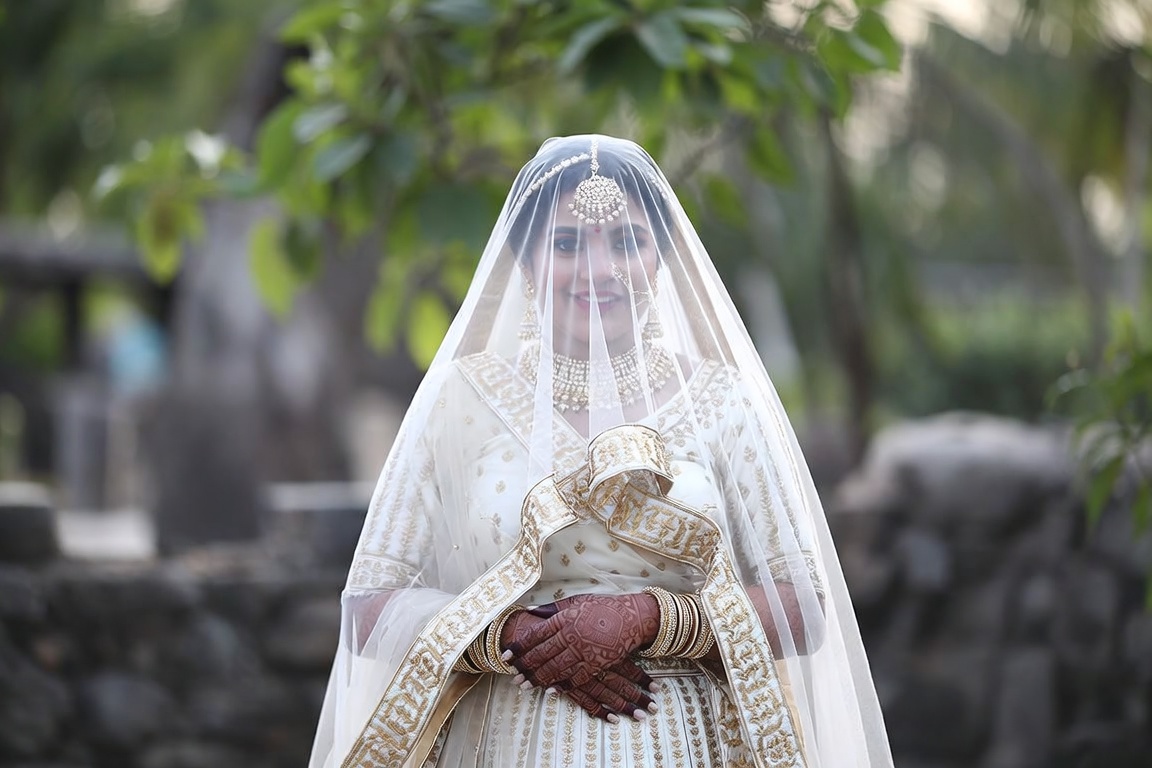
You are getting married in New Jersey, or Toronto, or Birmingham. Your grandmother is in Lucknow. Your father’s brother is in Hyderabad with three children and no realistic way to bring them. Half the people who raised you will not be in the room.
This is one of the most common realities of a diaspora wedding and one of the least discussed. Here is how families actually handle it.
Indian weddings are built on the assumption that the whole family is present. The rituals assume it. The seating assumes it. The emotional structure of the vidai assumes it.
When that assumption breaks, it is not a logistics problem. It is a grief problem wearing a logistics costume. Couples who treat it purely as a scheduling issue tend to be blindsided by how much it hurts on the day.
Understanding the specific reason helps, because the solutions differ.
Visa refusals. The most common and most painful. Visitor visa applications from India to the US, UK, and Canada are refused frequently, often without meaningful explanation, and often close to the travel date.
Cost. Flights, accommodation, and time off for a multi-day event, multiplied across a family, is out of reach for many.
Health and age. Elderly relatives who cannot manage long-haul travel. This is the group most likely to be missed and least likely to have another chance.
Work and leave. Gulf-based relatives in particular often cannot get leave during peak wedding season.
Timing. Weddings scheduled around one side’s calendar frequently exclude the other’s.
Hold a second event in India. Common and effective — a reception in the home city so relatives who could not travel can still celebrate. Expensive, but for many families it is the real solution.
Live stream the ceremony. Works better than people expect, especially for the ceremony itself. Time zones are the main obstacle: a 4pm ceremony in California is 4:30am in Delhi.
Record video messages beforehand. Increasingly the default, because it works around time zones entirely and because it produces something that lasts.
Assign someone to call during key moments. A cousin on a video call during the vidai or the pheras. Low-tech, surprisingly meaningful.
Send something physical. A saree from a grandmother, jewellery from an aunt — presence by proxy.
A live stream is a one-time event that requires a grandmother in India to be awake, online, and using technology she may not be comfortable with, at four in the morning, with a stable connection.
A recorded message requires none of that. She records when she is ready, in her own home, in her own language, as many takes as she wants. And unlike a live stream, the couple keeps it.
The practical difference: after the wedding, nobody rewatches a live stream. Everybody rewatches the messages.
The failure mode is always the same. You ask twenty relatives to send videos. Eight send them on WhatsApp where compression destroys the quality. Four send files you cannot open. Six forget. Two send forty-minute recordings. You spend the week before your wedding doing video editing.
Folksee exists for this specific problem. You write a prompt, share one link on WhatsApp, and everyone records directly from their own phone. Contributors sign in with Google or an email address. It takes a few seconds, and there's nothing to install, which is the single biggest factor in whether older relatives actually participate. Every message is collected into one reel automatically and plays back in order.
Practical advice regardless of what tool you use:
Most couples play it at the sangeet or the reception rather than during the ceremony itself. The vidai is already emotionally saturated, and adding to it can tip the day.
An underrated option: watch it privately, the night before or the morning after. It is a different experience without an audience, and often a better one.
Some of the people who cannot come will not get another chance. Grandparents in particular. Families that collect these messages are frequently glad they did for reasons that have nothing to do with the wedding.
That is not a reason to be morbid about it. It is a reason to do it properly, and to start early enough that nobody is left out because you ran out of time.
Why we made Folksee
People deflect love when you say it to their face. A reel takes the room away, so it finally lands — and it's the opposite of doomscrolling.
Read what Reels with Feels means →


Everything works best in your phone’s browser. Tap below to open Folksee in Chrome/ Safari.
