
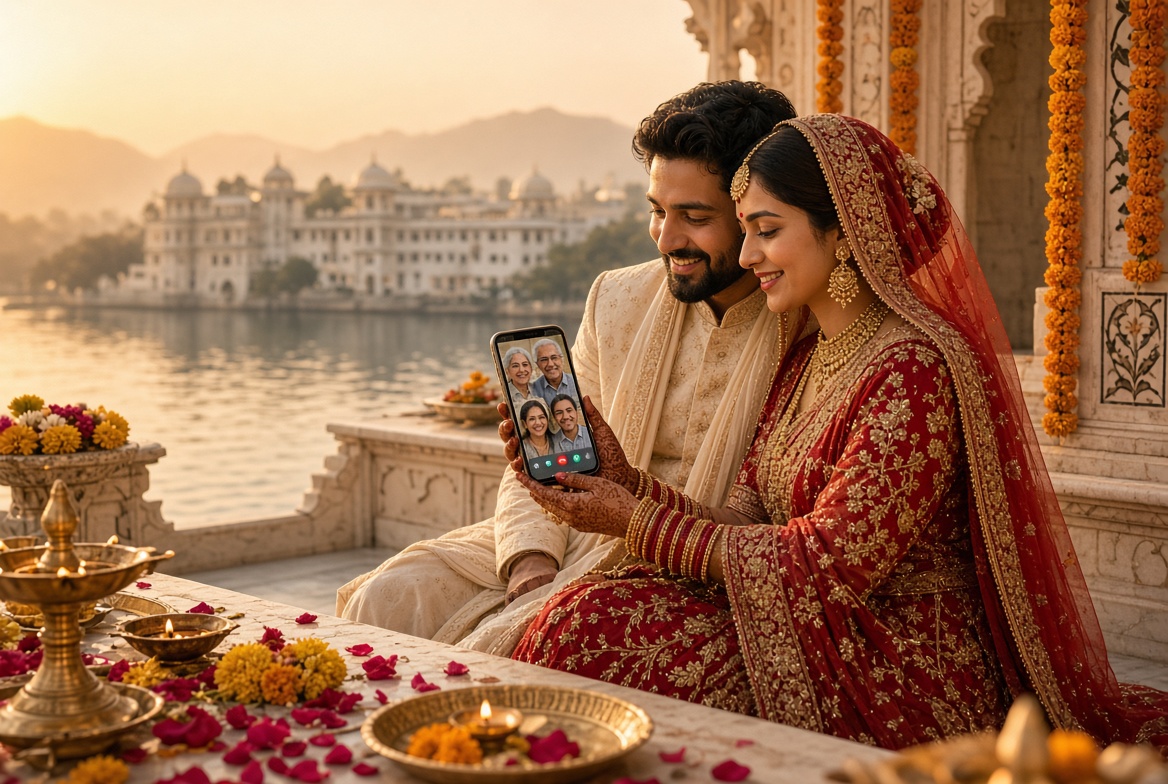
You chose Udaipur, or Goa, or a resort in Phuket. It will be beautiful. It will also cut your guest list roughly in half, and the half that drops off will not be random — it will be the elderly, the young families, and anyone for whom flights and four nights of accommodation are not casual.
Destination weddings are worth doing. This is about doing them without losing the people who matter most.
Before booking anything, work out who realistically cannot attend. Usually:
If that list includes people you cannot imagine marrying without, that is worth knowing before the deposit is paid, not after.
Block-book accommodation at multiple price points. Not everyone can afford the resort. A decent nearby option lets people attend who otherwise would not.
Arrange group transport from the nearest major city. Removes a genuine obstacle for older guests.
Shorten the mandatory portion. A three-day event where only one day is essential lets people come for less.
Be explicit about what is covered. Ambiguity makes people assume the worst and decline.
Send invitations very early. Six to nine months for a destination wedding. Cheap flights booked early are the difference for many families.
Hold a second event at home. The most complete solution. A reception in the home city afterward, specifically for people who could not travel. Many families now plan this from the start rather than as a fallback.
Collect video messages beforehand. Works around time zones and travel entirely, and produces something that outlasts the wedding.
Live stream selectively. The ceremony, not the whole event. Check the venue’s connectivity honestly — many resort locations have poor upload bandwidth, and a broken stream is worse than none.
Send a same-day photo album on WhatsApp. Small effort, disproportionate emotional return for relatives at home.
Visit them personally before you leave. Going to see a grandmother the week before, in her home, matters more than any streaming setup.
If you are having a destination wedding, this is close to essential rather than optional — precisely because the people who cannot travel are the people whose blessings the ceremony traditionally centres on.
Practically:
The logistics are where this normally falls apart — WhatsApp compresses video, files arrive in unplayable formats, and you end up editing footage the week of your own wedding. Folksee handles that part: one link, everyone records from their own phone, and every message plays back in order in one reel. Contributors sign in with Google or an email address. It takes a few seconds, and there's nothing to install. That last detail is what determines whether your 78-year-old grandmother actually takes part.
Destination weddings have a natural slot for this that home weddings do not: the welcome dinner or first-night event, when everyone has just arrived and the mood is warm but not yet frantic.
Playing it then does something useful — it establishes early that the absent family are part of this, rather than tacking them on as an afterthought at the reception.
The most-skipped step. People who recorded messages want to know the couple saw them.
A destination wedding buys you a beautiful setting and costs you attendance. That is a legitimate trade and plenty of couples make it happily.
Just make it deliberately. The version that goes wrong is the one where nobody thought about the grandmother in Kanpur until the week of the wedding, and by then there was no time to do anything about it.
Why we made Folksee
People deflect love when you say it to their face. A reel takes the room away, so it finally lands — and it's the opposite of doomscrolling.
Read what Reels with Feels means →


Everything works best in your phone’s browser. Tap below to open Folksee in Chrome/ Safari.
